
HISTORY
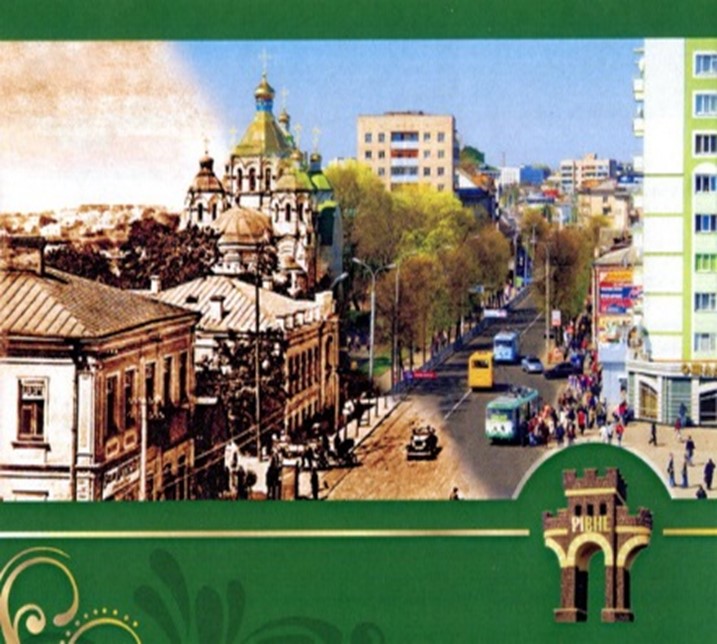
Rivne is known since 1283. The city status was granted in 1939. During the seven centuries of its existence, the buildings of Rivne have repeatedly caught fire. But no one has managed to destroy the city. The hardworking hands of its inhabitants rebuilt what was destroyed. Rivne has grown, and now it has become the administrative and economic center of the Rivne region, which is part of independent Ukraine. Rivne is a city of regional significance in Ukraine, the regional center of the Rivne region. The city is located on the Ustia River.
SIGHTS of RIVNE
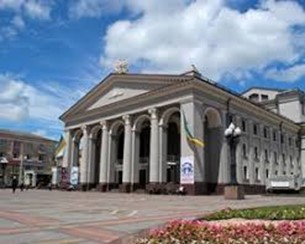
Ukrainian Musical and Drama Theater was founded in December 1939. The theater became famous due to the fact that it was on its stage that the premiere production of William Shakespeare’s “King Lear” was performed for the first time in Ukraine, as well as the fact that in the theater’s performance “Stolen Happiness” by Ivan Franko, National Artists Nataliia Uzhvii and Amvrosii Buchma played. National Artists of Ukraine Nina Nikolaeva, Heorhii Moroziuk, and Honored Artists of Ukraine Zinovii Kret, Volodymyr Diakov, Halyna Tsemyk, Etro Lisnichuk work fruitfully in the theater.
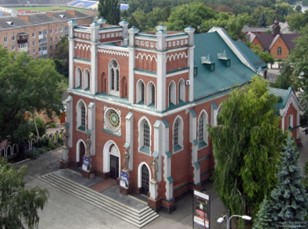
In the 16th century, a wooden Catholic church served believers on the site of the well-known organ hall building. Later, the new spiritual authorities built a brick church of St. Anthony. Already in the 1950s, the Soviet authorities began to destroy the Catholic shrine. Since then, the Globus cinema has been operating in this building, where documentary chronicles were shown. After restoration and minor reconstruction, a chamber and organ music hall was opened.
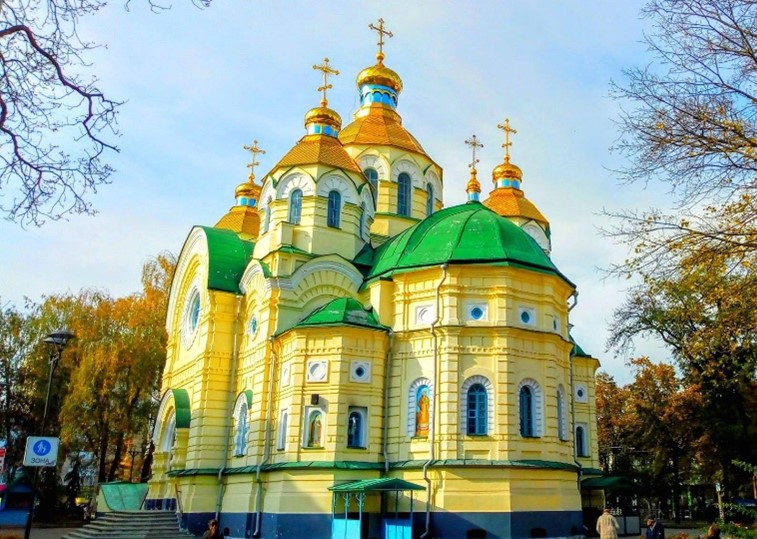
Orthodox wooden Holy Resurrection Church was built in 1731. After the fire of the wooden church, people began to collect donations for the construction of a new church. At the inauguration of the new church, the city was expecting the arrival of Emperor Alexander III with his family members. At the Rivne station, Alexander III, his wife Maria Feodorovna, the Tsarevich, Grand Duke Nikolai Alexandrovich, Grand Duchess Ksenia Alexandrovna and other persons were met by the city authorities and Prince Lubomirskyi. The consecration of the new Cathedral was held on October 8, 1895. Kremenets and Zhytomyr. Initially, the new temple was called the Alexander Cathedral, then it was returned to its first name – the Holy Resurrection Cathedral. In 1912, the cathedral received church relics and several precious icons as a gift from the Patriarch of Jerusalem. In February 1962, the authorities closed the cathedral and demolished some church buildings. The Museum of Cosmonautics and Scientific Atheism was opened in the cathedral. And only after 27 years of such mockery and various persecutions, in April 1989, the temple was returned to the Orthodox Church, and the Holy Resurrection Cathedral again met its parishioners.
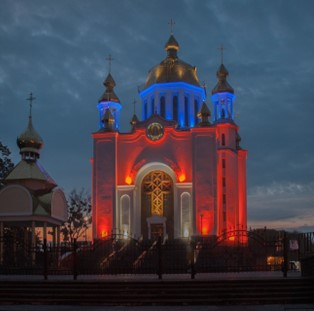
The cornerstone of the Intercession Cathedral was laid by the Patriarch of Kyiv and All Ukraine Mstyslav in 1990. The Intercession Cathedral is one of the largest and tallest churches in Ukraine. Its length is 51 m, width is 42 m, height is 55 m. The large dome, symbolizing Jesus Christ, and 12 smaller ones, symbolizing the apostles, as well as 8 small domes create a magnificent composition that is an adornment of Rivne and is visible from all sides of the city. The church has lifts for the disabled and the elderly, there are rooms for a children’s Sunday school, a first-aid post, a library, choir rehearsals, a museum, etc.
RIVNE REGION
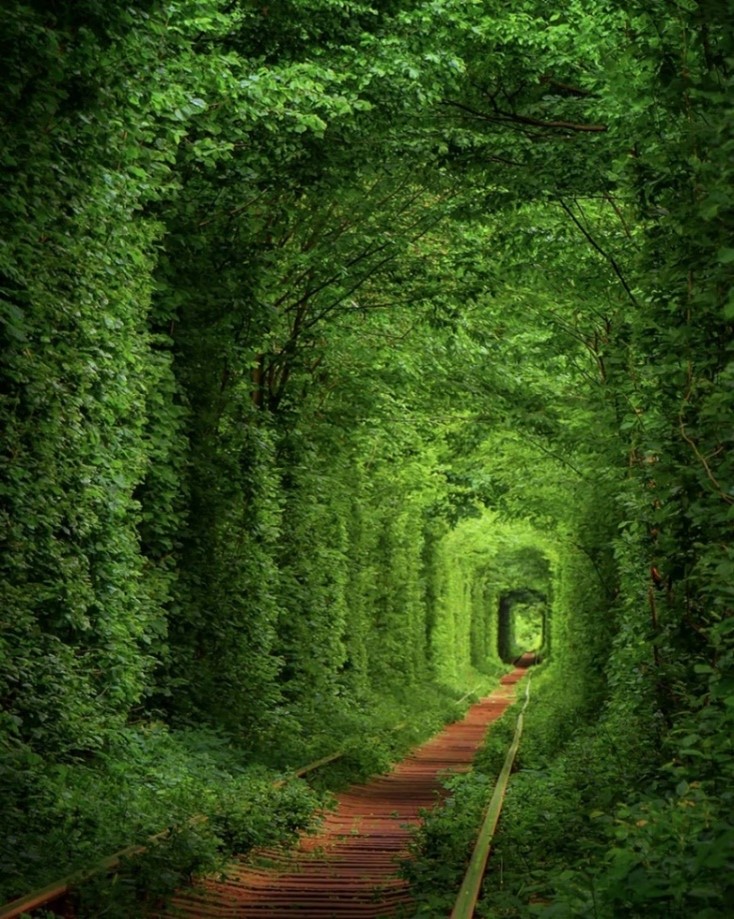
Tunnel of Love – a popular tourist attraction located near village Klevan. It has no analogues in Europe and the world (until 2017, when a similar tunnel was opened in China).
This is a green tunnel in a forest massif, formed by the movement of a train to/from a woodworking plant in Orzhev. On its way through the forest, the train knocks down branches of trees and bushes. As a result, a dense corridor of a precise arched shape was formed. So this is not a miracle of nature, but a consequence of the man-made impact of the train. Thanks to successful marketing, the tunnel is a place of pilgrimage for tourists and lovers. There are a number of beliefs about the tunnel and its properties. Some newlyweds plant flowers here to symbolize their feelings.
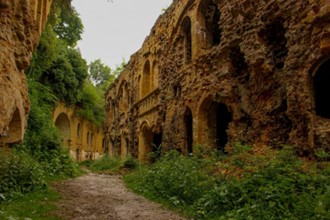
Tarakaniv Fort – an architectural monument of the 19th century. Located near the village of Tarakaniv, Dubno district, Rivne region, in a picturesque area above the Ikva River. Now the ruined walls of the arches, mounds of bricks and signs “Passage is prohibited” resemble the scenery of an apocalyptic film. But despite its neglected appearance, Tarakaniv Fort attracts with its past grandeur and amazing interweaving of underground tunnels used for military exercises and defense.
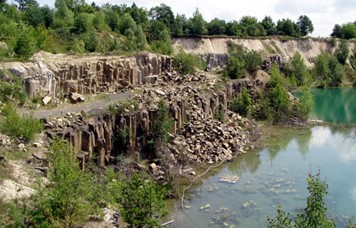 Basalt Pillars – a geological natural monument of local importance in Ukraine. Area 0.8 hectares. Created on the basis of the Ivano-Dolyn basalt deposit. Nature conservation status since 1972. Basalt columns are an igneous rock, broken by cracks into columnar structures characteristic of basalt. The most picturesque quarry with basalt pillars is located in the Yanova Dolyna tract near the village of Bazaltovoye. In the middle of the flooded quarry, a small island has
formed here, which is called the “Island of Love”.
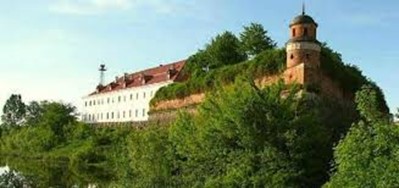
The Castle of the Princes of Ostroh of the 15th century in Dubno is one of the oldest castles in Ukraine, which still bears the features of the Middle Ages (severe walls, dungeons with vaults) and the ceremonial style (halls decorated with stucco). Dubno castle was never taken by storm, as it was strongly fortified with 73 cannons and reliably protected by the Ikva River with its many kilometers of floodplains. Tatar spears and Swedish sabers were broken under the walls of the castle. Countless treasures of trophies were kept here: precious dishes, books, paintings, icons, weapons and protective equipment, furs, etc. Today, Dubno castle is an ornament of the region and one of the seven wonders of Ukraine.